
For the Binghamton Infant Face Processing Study, CliniContact ran a 17-month recruitment campaign focused on eligibility quality and controlled pacing—helping the study team maintain steady enrollment without exhausting the local audience.
The Infant Face Processing Study is a developmental psychology research project focused on early infant perception. Recruitment targeted caregivers of infants within the eligible age range who could reasonably travel to the study location within the Binghamton area.
Participant group: caregivers of infants (3–12 months)
Recruitment area: Binghamton MSA / realistic travel distance
Recruitment content: IRB-compliant messaging and structured intake
Handoff: only pre-qualified candidates forwarded to the study team
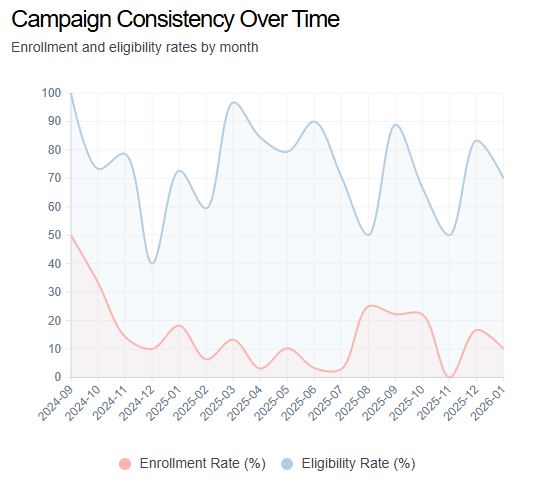
Rather than relying on short-term awareness spikes, the campaign was designed around precision, pacing, and eligibility control. All outreach was conducted with IRB-appropriate messaging and routed through a structured pre-screening workflow before reaching the research team.
Outreach was distributed across platforms commonly used by caregivers of infants, with each channel serving a specific function in the funnel:

Only candidates meeting baseline criteria were routed forward. This approach significantly reduced follow-up time spent on ineligible families and allowed staff to focus on scheduling and study coordination rather than initial vetting.
A structured digital intake process was used to limit the burden on the research team. Instead of passing through raw inquiries, leads were screened for:
Location and travel feasibility
Infant age (current and projected eligibility)
Parental consent and interest indicators
If you’re recruiting within a limited geography—or working with narrow inclusion windows—lead volume alone won’t solve enrollment pacing. A quality-first approach can reduce screening load, improve scheduling predictability, and extend runway in smaller markets.
.png)
Fewer staff hours spent screening ineligible inquiries
.png)
More predictable enrollment pacing for lab and coordinator planning
.png)
Better sustainability in geographically constrained recruitment pools
This case study illustrates that smaller metropolitan areas do not inherently limit recruitment success. When digital outreach is paired with rigorous pre-screening and deliberate pacing, it is possible to maintain enrollment quality, control staff burden, and support longitudinal research goals.
For the Binghamton Infant Face Processing Study, shifting the focus from lead volume to eligibility and timing resulted in a sustainable recruitment model suited to both current data collection and future study extensions.i magna.