What AI tells patients about your trial
 By Sue-Ann Schmitt, Chief Operating Officer
Before someone calls a site, a lot of them now ask an AI tool first. Is this trial still recruiting? Where is it? Is the drug safe? Who do I call?
KFF's tracking poll from May this year found that 29% of US adults use AI tools for health information and advice at least once a month. In 2024 it was 17%.
So it's worth asking what those tools say about your study, and about the medicine it's testing. We've been checking, and the answer isn't always what you'd hope.
The wrong answers usually aren't invented
When people hear "AI gets things wrong," they imagine it making things up. That does happen. But in the checks we've run, most wrong answers about trials and medicines came from pages that were right when they were published.
Some of the sources we've traced for trials:
- an old press release saying the next phase was "being prepared", repeated by news sites long after the trial opened;
- a copy of a registry record saved by another website before recruitment started, which then says "not yet recruiting";
- an older version of a site list, with fewer sites than the trial now has.
When the label changes
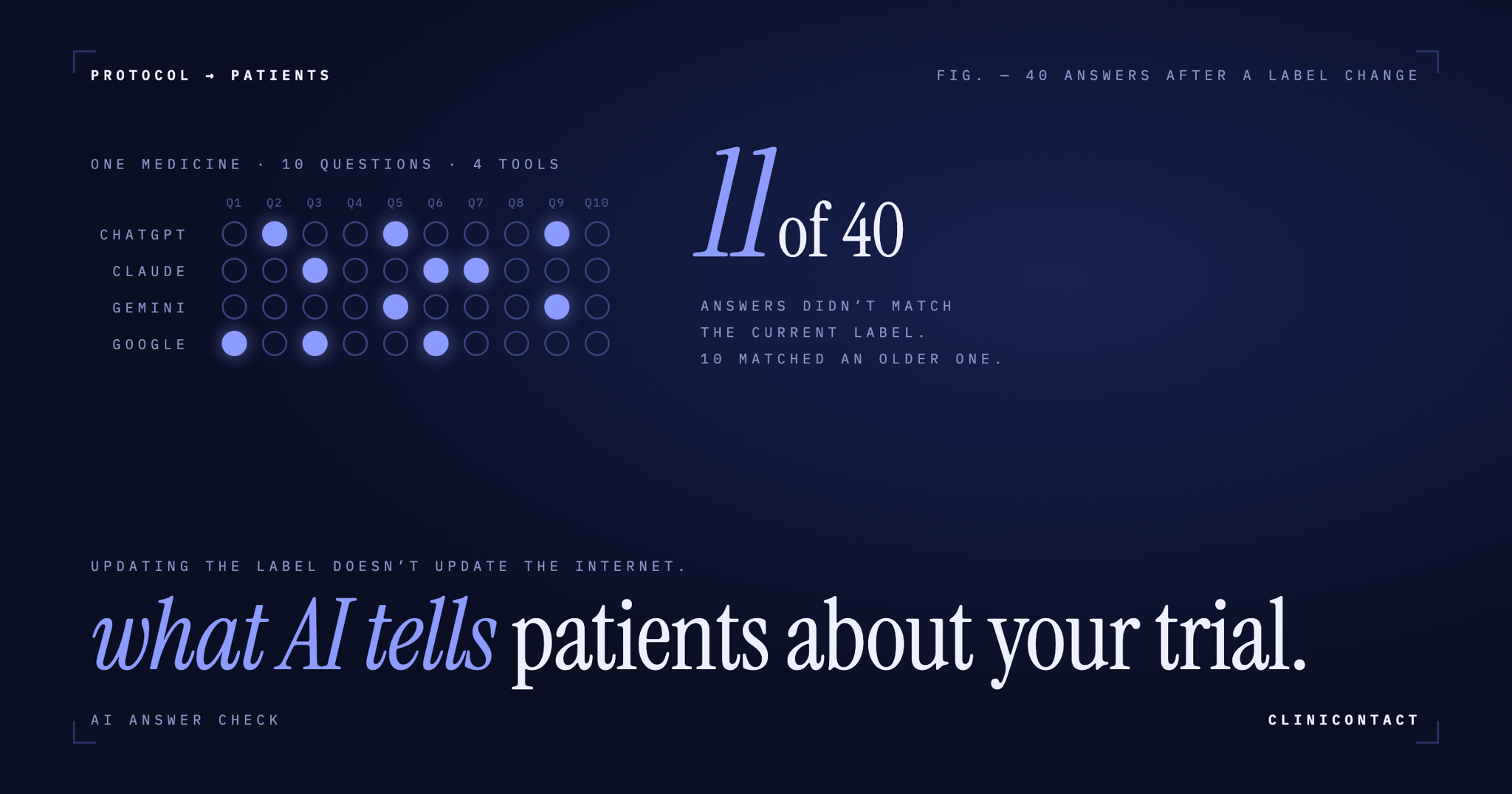
Medicines show the same pattern. We ran a small audit on one medicine after its FDA label was updated. We asked ChatGPT, Claude, Gemini and Google the questions a patient or a doctor would ask, and read all 40 answers against the current label.
11 of the 40 didn't match it. Almost all of those 11 had been right under an earlier version of the label.
The surprising part was where they came from. Some came from an old press release. But much of it wasn't on the manufacturer's website at all. It was on third-party pages, such as drug guides and pharmacy pages, that the tools were still citing.
Updating the label doesn't update the internet. The same is true of a registry record.
Nobody did anything wrong. The pages were accurate on the day. They just never got updated, and AI tools don't always know which version is newest.
Why this matters for recruitment
A person who's told a trial isn't recruiting yet doesn't call. A person who's given the wrong sites thinks it's too far away. A person who's told something about the drug that isn't on the label may not come back.
You never see these people. They don't appear in your funnel, because they dropped out before they reached it.
What I'd do
None of this needs new technology. It needs someone to own the public record.
- Keep the registry record current. Status, sites and contacts. It's the page most AI answers about a trial lean on, and it's the one the sponsor controls.
- Add a dated note to old announcements. You don't need to delete a press release. A single line saying "This trial is now enrolling" changes what gets repeated.
- Have one plain page for patients. What the study is, who it's for, where the visits are and how to get in touch. Clear facts, easy to find.
- Ask the tools yourself, and again after anything changes. Ask the questions a patient would ask, in the apps patients use, from the country they live in. Answers change by location. Then read every answer properly. A new label, a new site or a new status is the moment to check.
The point
Patients are already asking AI about your trial. The question is whether the answers come from your current information or from whatever happens to still be online.
Want us to check yours?
We run these checks on trials and medicines. Send us your trial's registry number or your medicine's name. We'll ask the AI tools patients use the questions patients ask, read every answer against your current record or label, and show you which answers are out of date and which pages they come from.
Get in touch and we'll set one up.